

Digital X-Rays

Digital X-Rays

Digital X-Rays

Digital X-Rays

Digital X-Rays

Digital X-Rays

Digital X-Rays

Digital X-Rays

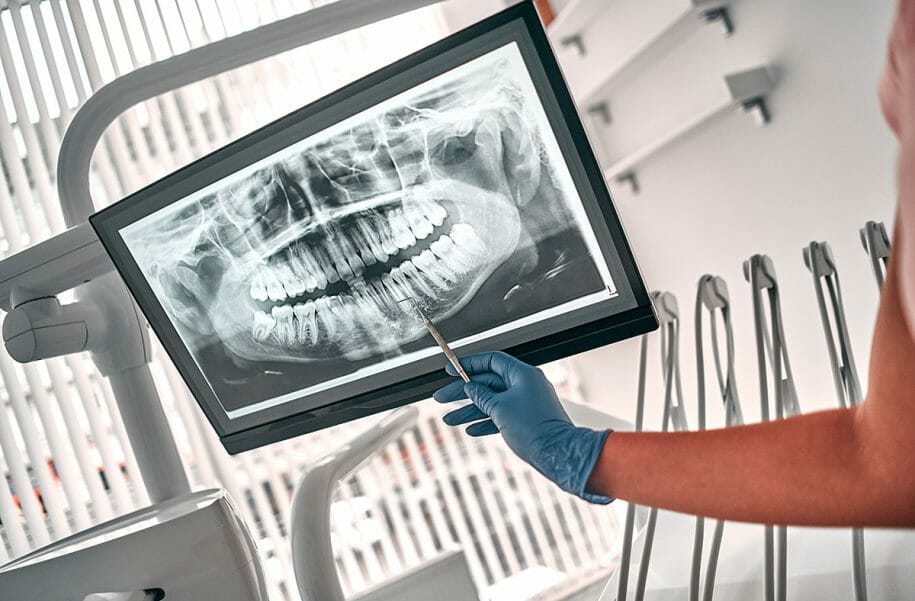
Digital radiography (digital x-ray) is the latest technology used to take dental x-rays.  This technique uses an electronic sensor (instead of x-ray film) that captures and stores the digital image on a computer.  This image can be instantly viewed and enlarged helping the dentist and dental hygienist detect problems easier.  Digital x-rays reduce radiation 80-90% compared to the already low exposure of traditional dental x-rays.

Dental x-rays are essential, preventative, diagnostic tools that provide valuable information not visible during a regular dental exam.  Dentists and dental hygienists use this information to safely and accurately detect hidden dental abnormalities and complete an accurate treatment plan.  Without x-rays, problem areas may go undetected.

Dental x-rays may reveal:

  • Abscesses or cysts.
  • Bone loss.
  • Cancerous and non-cancerous tumors.
  • Decay between the teeth.
  • Developmental abnormalities.
  • Poor tooth and root positions.
  • Problems inside a tooth or below the gum line.

Detecting and treating dental problems at an early stage may save you time, money, unnecessary discomfort, and your teeth!

Are dental x-rays safe?

We are all exposed to natural radiation in our environment.  Digital x-rays produce a significantly lower level of radiation compared to traditional dental x-rays.  Not only are digital x-rays better for the health and safety of the patient, they are faster and more comfortable to take, which reduces your time in the dental office.  Also, since the digital image is captured electronically, there is no need to develop the x-rays, thus eliminating the disposal of harmful waste and chemicals into the environment.

Even though digital x-rays produce a low level of radiation and are considered very safe, dentists still take necessary precautions to limit the patient’s exposure to radiation.  These precautions include only taking those x-rays that are necessary, and using lead apron shields to protect the body.

How often should dental x-rays be taken?

The need for dental x-rays depends on each patient’s individual dental health needs.  Your dentist and dental hygienist will recommend necessary x-rays based upon the review of your medical and dental history, a dental exam, signs and symptoms, your age, and risk of disease.

full mouth series of dental x-rays is recommended for new patients.  A full series is usually good for three to five years.  Bite-wing x-rays (x-rays of top and bottom teeth biting together) are taken at recall (check-up) visits and are recommended once or twice a year to detect new dental problems.

Facial Trauma Reconstruction

Oral & Maxillofacial Surgeons are specialist trained to manage and treat facial trauma. There are an infinite number of ways in which the face can be damaged and thus need some type of reconstruction. Accidents, falls, automobile crashes and interpersonal violence...

Cracked Tooth

Cracked and fractured teeth are common dental problems. As people retain their natural teeth longer (due to advances in dental technology), the likelihood of cracked teeth increases. There are many reasons why teeth may crack, for example, biting on hard objects,...

Davinchi™ Veneers

Today, a wonderful pearly-white smile is important for a wide variety of reasons.  Beautiful teeth can boost self-esteem and self-confidence, and a stunning smile is often the most recognized feature of a person.  daVinciTM dental veneers have been renowned for...

Cosmetic Dentistry

In the past decade there has been a dramatic interest in cosmetic dentistry.  We all realize that having a healthy, bright, beautiful smile enhances our appearance and allows us to smile with confidence.  Thanks to the advances in modern cosmetic dentistry, we are...

TMJ (Tempro-Mandibular Joint Dysfunction)

Tempro-Mandibular Joint Dysfunction Syndrome (TMJ) is a common condition affecting a wide variety of people. TMJ is characterized by severe headaches, jaw pain of varying degrees, grinding teeth, and an intermittent ringing in the ears. The vast majority of TMJ...

Crowns (CAPS)

A crown (or cap) is a covering that encases the entire tooth surface restoring it to its original shape and size.  A crown protects and strengthens tooth structure that cannot be restored with fillings or other types of restorations. Although there are several types...

Air Abrasion

Air abrasion is a new micro-dentistry technique that is used to treat tooth decay and prepare teeth for restorations.  Traditionally, dentists used noisy dental drills to remove decay and prepare the teeth for fillings, but air abrasion has proven to be a noiseless,...

Root Amputation

Root amputation is a specialized dental procedure, whereby one root is removed from a multi-root tooth. The tooth is then stabilized and rendered fully functional with a crown or filling. The multi-root teeth best suited to the root amputation procedure are the molars...

Our Commitment to Patient Safety

To Our Valued Patients As we have done, we will continue to adhere to strict universal precaution methods for disinfection, sterilization and sanitation, recommended by the regulatory agencies.  Infection control and the safety and health of our patients and team...

Oral Pathology

An oral exam is routinely performed by the dentist during the course of an initial comprehensive exam and regular check-ups. An oral cancer exam refers to the identification and management of diseases pertaining to the maxillofacial and oral regions. The soft tissue...

Request An Appointment

To request an appointment, please contact us directly:

☎ (407) 814-4940
✉ appointments@infinitydental.co

Call Us!

(407) 814-4940

Visit Us!

1450 N Rock Springs Road
Apopka, FL 32712

Patient Testimonials


Our Social Media


Facebook Feed

Infinity Dental